
Demolition Scaffolding
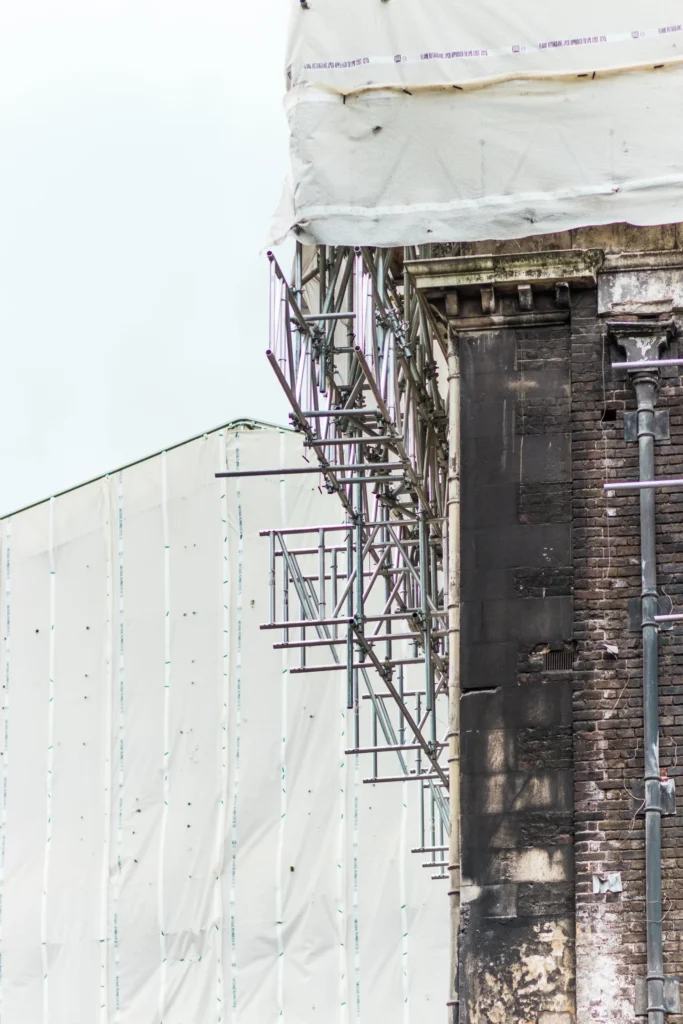
Of all the environments a scaffolding team operates in, demolition is among the most demanding. A structure being taken down is, by definition, in a state of controlled instability. The scaffolding must adapt alongside the demolition programme, responding to changing structural conditions as work progresses.
Planning the work
Under CDM 2015, demolition operates within the same statutory framework as other construction activities, but the risk profile is fundamentally different. Structural surveys, pre-demolition assessments, local authority notifications, traffic management and public protection all need to be resolved before a single standard goes up.
Related case studies
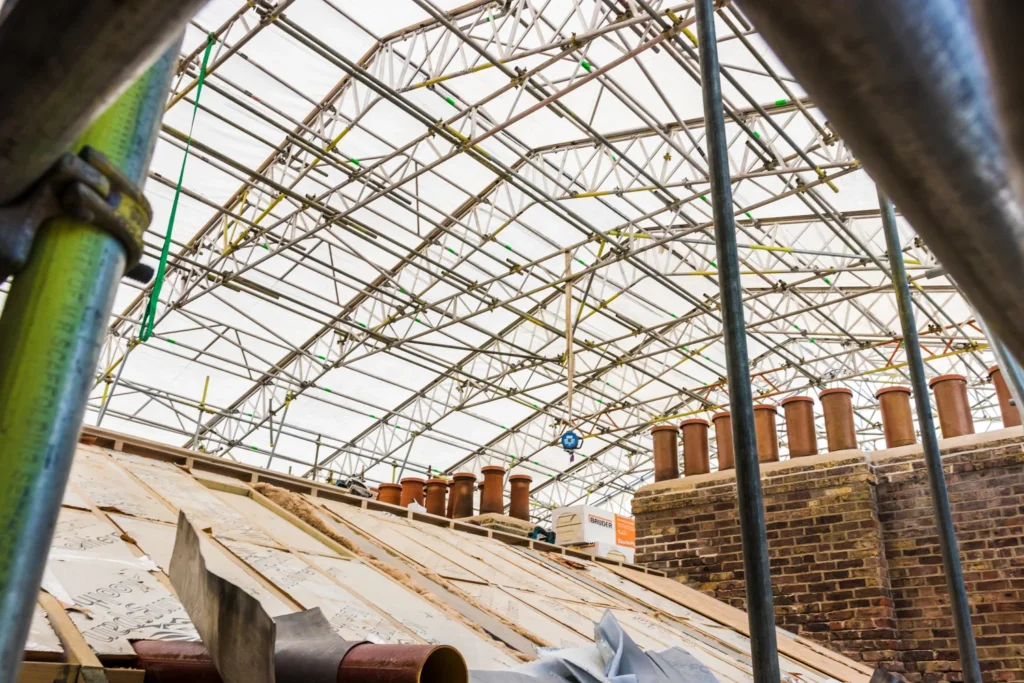
73-75 Grosvenor Street
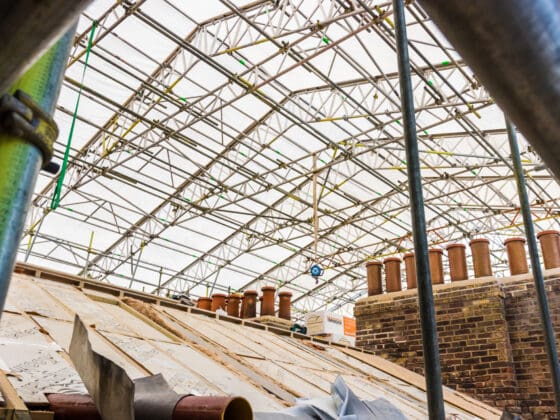
73-75 Grosvenor Street
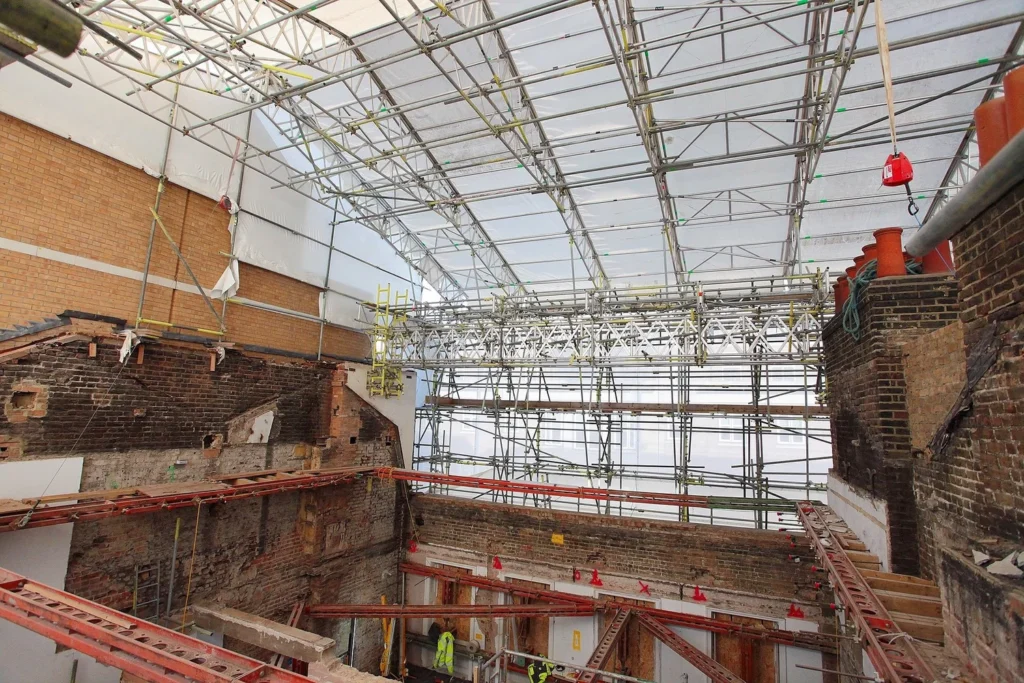
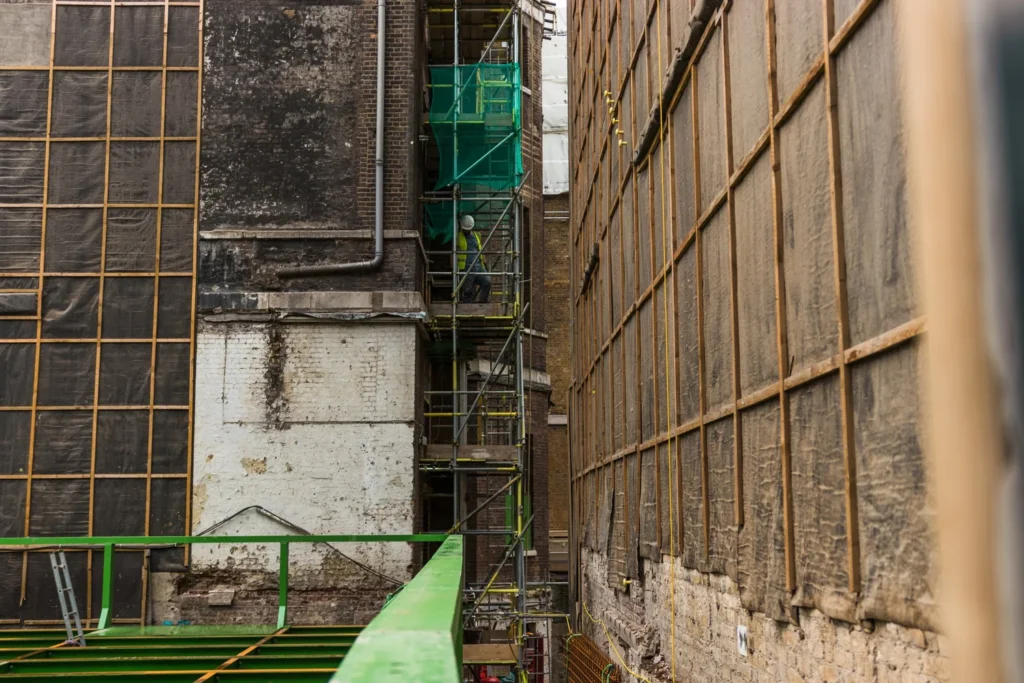
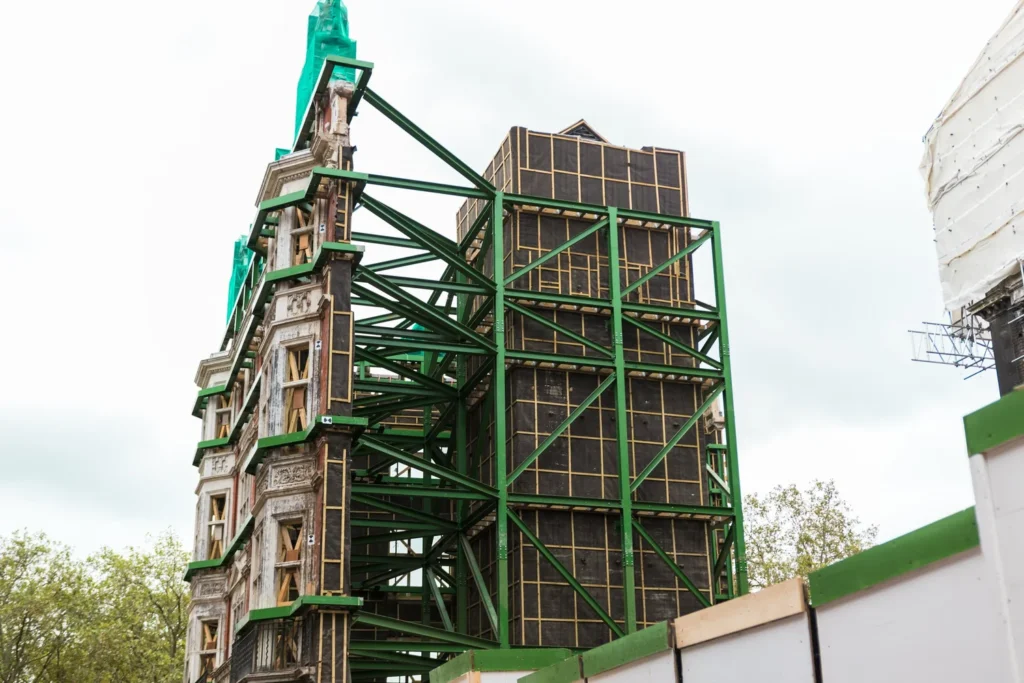
Three Grade II listed townhouses built in the 1720s, seven distinct structures hidden behind their Mayfair façades, and a construction sequence that had to be rebuilt when the walls revealed their true condition. This was heritage refurbishment at its most demanding.
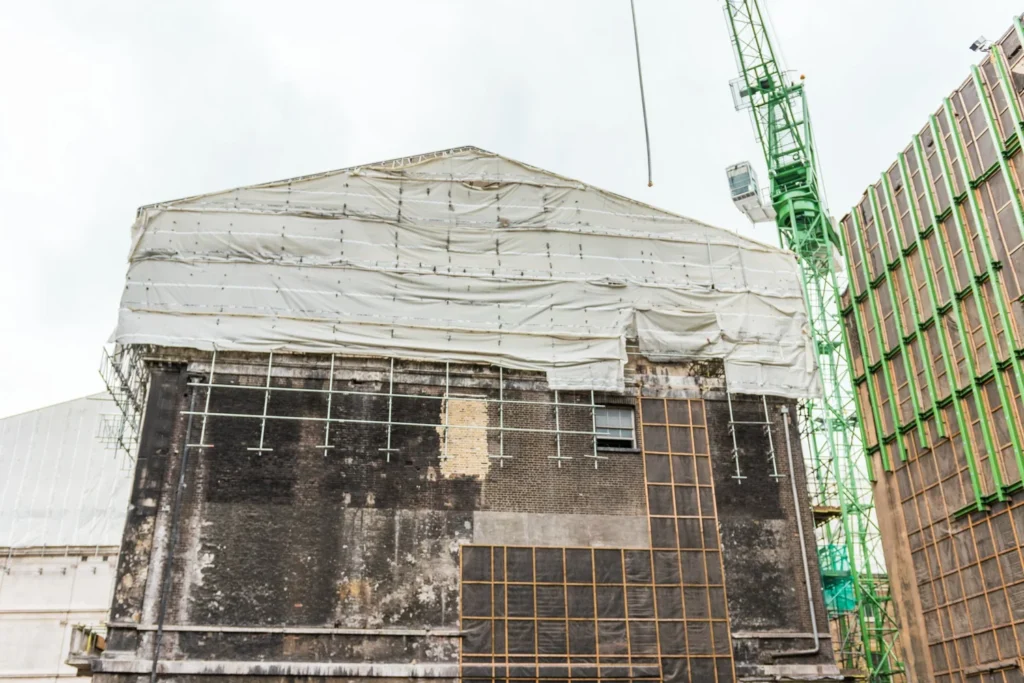
1 Portsoken Street
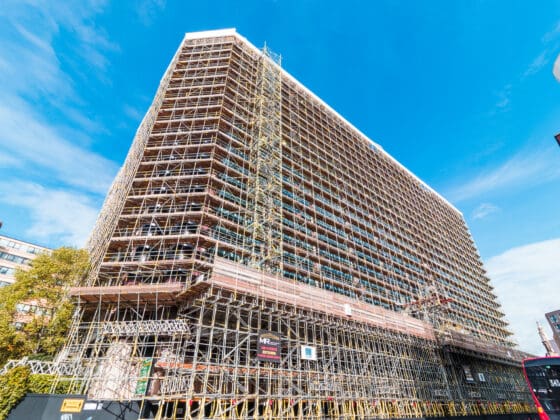
1 Portsoken Street
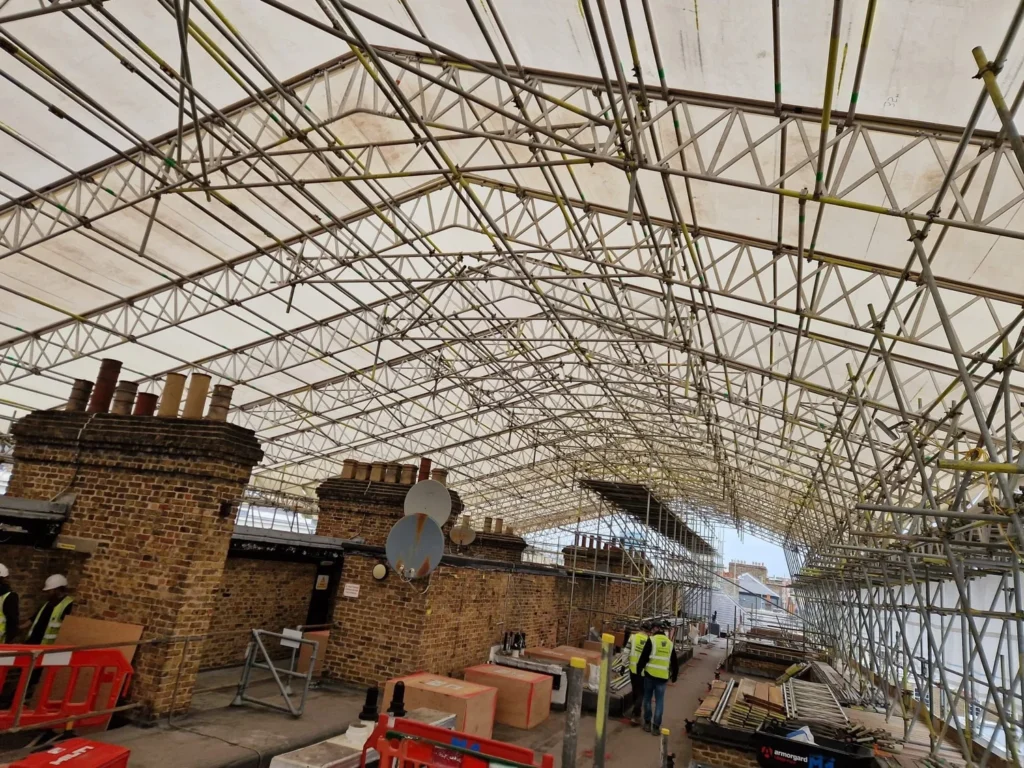
The largest design and build project ever completed in the UK. A nine-storey brutalist landmark gutted and transformed during a global pandemic, with a 42-metre atrium void to scaffold, three street elevations to gantry, and a workforce that never stopped moving.
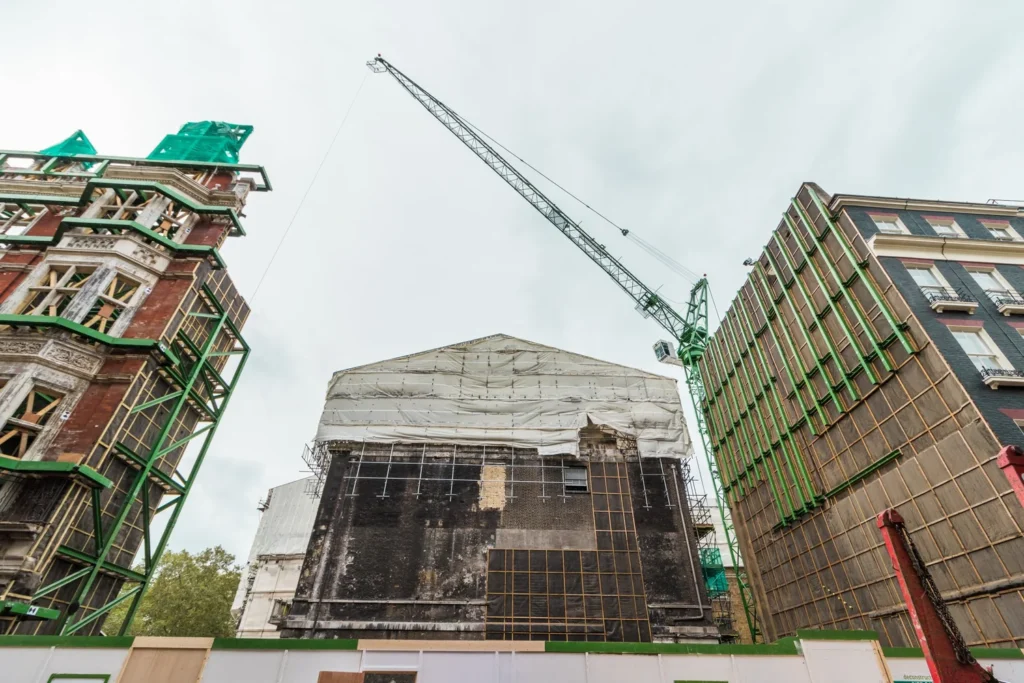
1 Lyric Square, Hammersmith
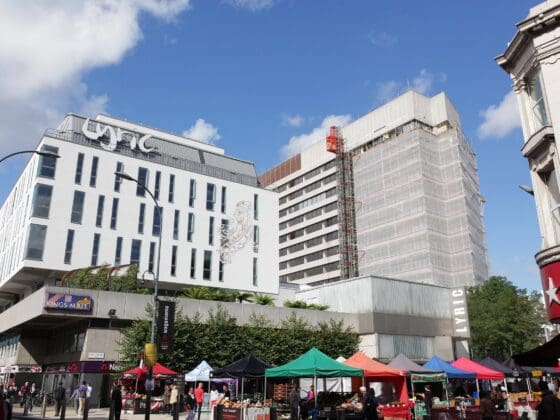
1 Lyric Square, Hammersmith
A 1970s Richard Seifert tower above an active shopping centre, a single access point for fourteen floors of simultaneous work, and a 52-week programme that couldn't stop the shops below. The building that came out the other side set record rents for Hammersmith.