
Hoists & Lifting Structures
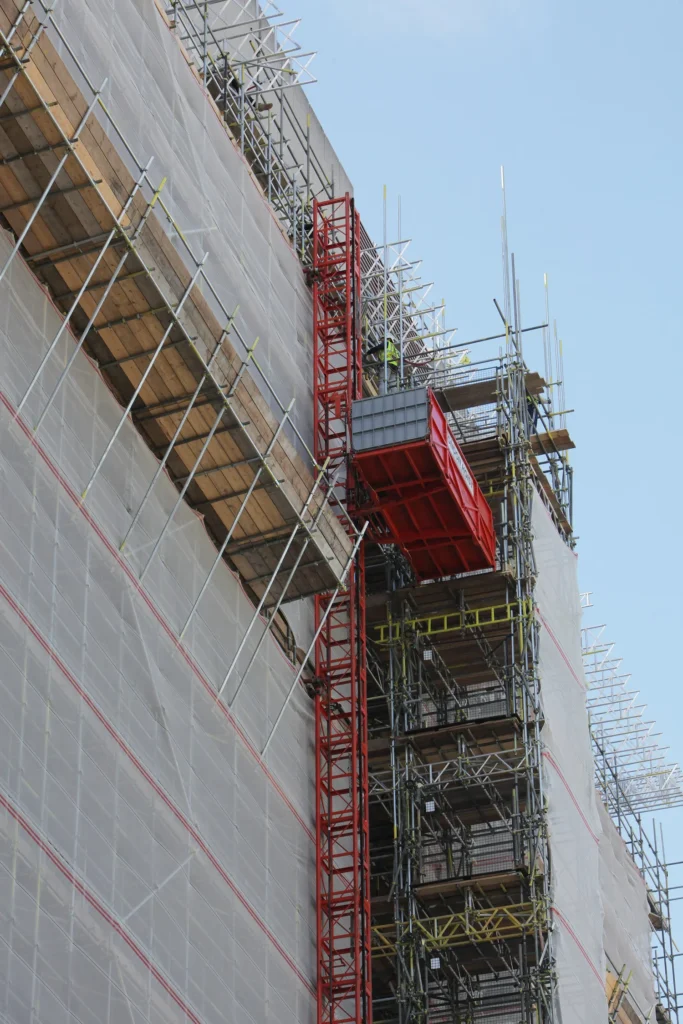
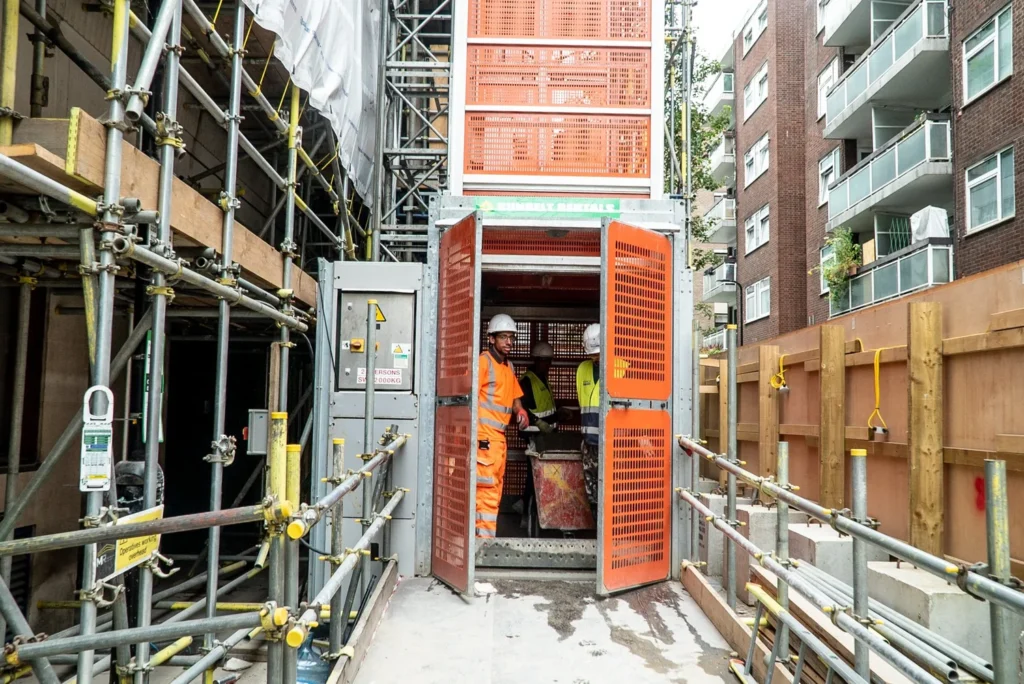
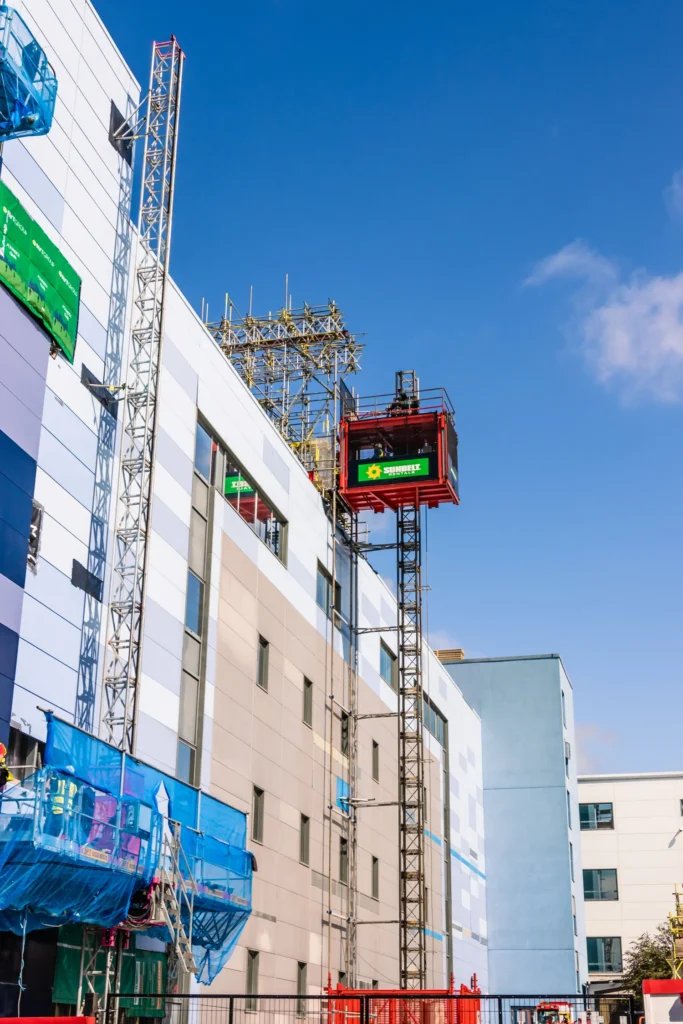
On large construction programmes, vertical logistics are critical to maintaining progress. Materials must reach the right level at the right time, and trades need reliable access to keep work moving.
Delays in lifting operations quickly impact the wider programme. Hoists and lifting structures are therefore not peripheral equipment – on multi-lift new builds, high-rise refurbishments, and complex commercial fit-outs they form part of the critical path.
Choosing the right solution for the programme
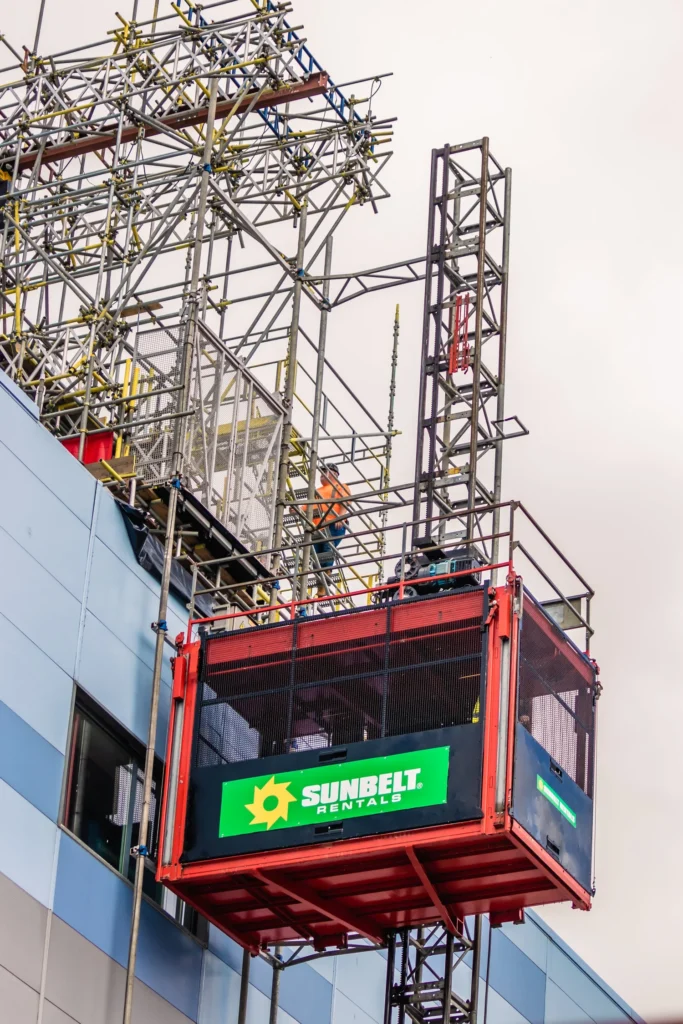
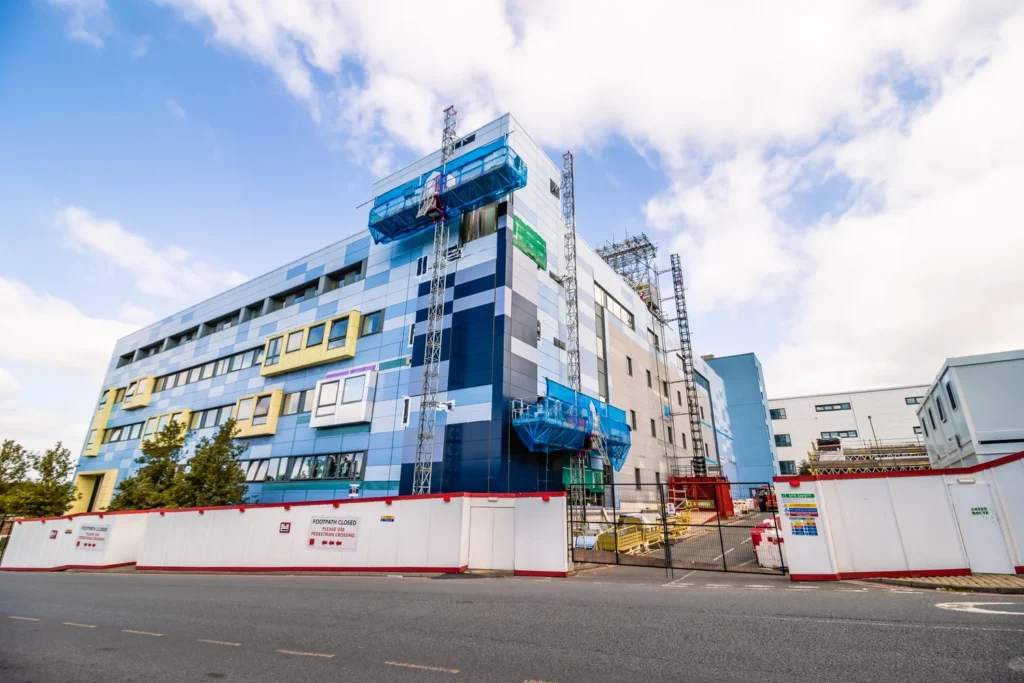
Modern construction projects have a wide range of lifting solutions available, and selecting the right one has direct implications for programme efficiency and cost. Scaffold hoists, goods-only hoists, passenger and goods hoists, and mast climbing work platforms each serve different roles.
Related case studies
Aldermanbury Square, City of London
Aldermanbury Square, City of London
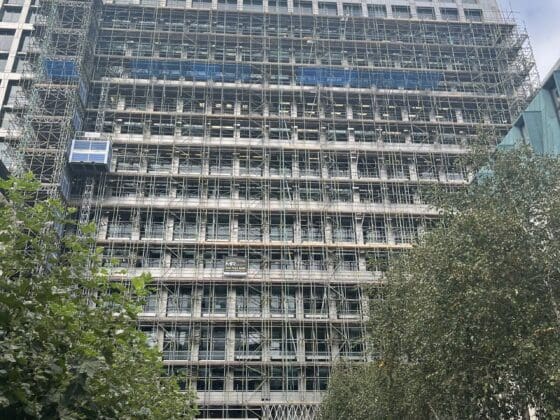
A 72-metre City of London tower requiring scaffolding engineering that had never been attempted before. Ties could only penetrate the building by 6mm, leading to a world-first quadruple tie system with 16 bolts per location - each individually pull tested. The South elevation required cantilevered steel beams punching out from basement level. Delivered across two phases while thousands of pedestrians moved safely through the site daily. City of London Gold Award.
Russell Hotel, Bloomsbury
Russell Hotel, Bloomsbury
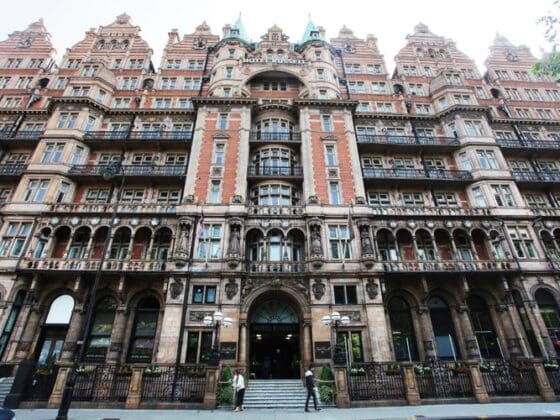
A Grade II* listed Victorian landmark on Russell Square. The Russell Hotel required engineering solutions as ambitious as the building itself.
63 St James Street
63 St James Street
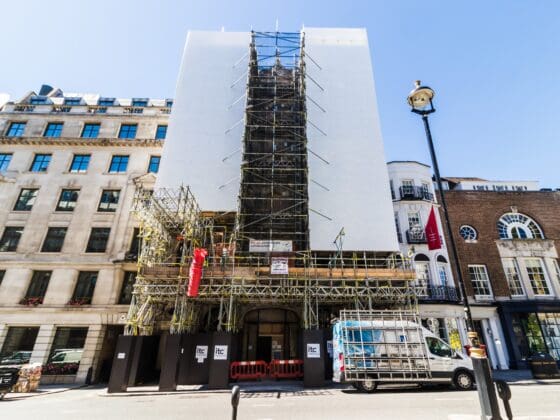
A 135-year-old building in one of London's most tightly governed conservation areas, where the age of the fabric ruled out scaffolding to the side and rear elevations entirely. The access solution had to be redesigned before a single tube went up.
73-75 Grosvenor Street
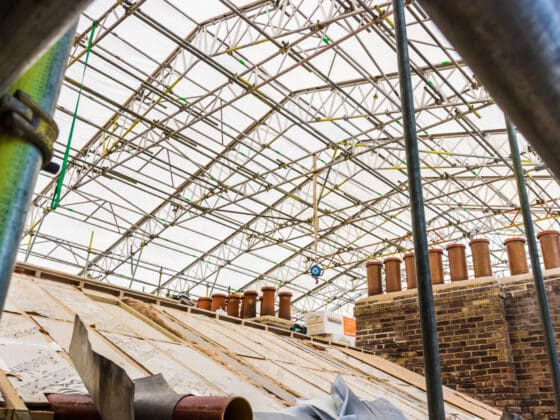
73-75 Grosvenor Street
Three Grade II listed townhouses built in the 1720s, seven distinct structures hidden behind their Mayfair façades, and a construction sequence that had to be rebuilt when the walls revealed their true condition. This was heritage refurbishment at its most demanding.
1 Portsoken Street
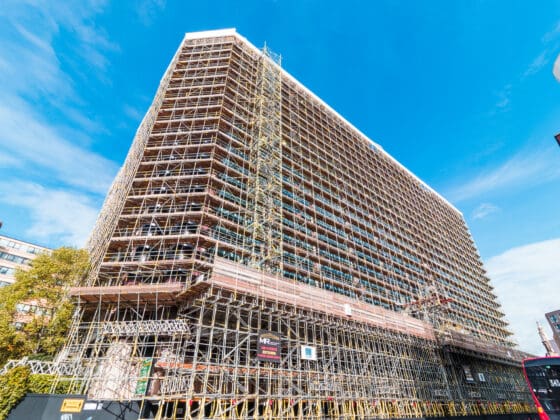
1 Portsoken Street
The largest design and build project ever completed in the UK. A nine-storey brutalist landmark gutted and transformed during a global pandemic, with a 42-metre atrium void to scaffold, three street elevations to gantry, and a workforce that never stopped moving.
Bellville House, Greenwich
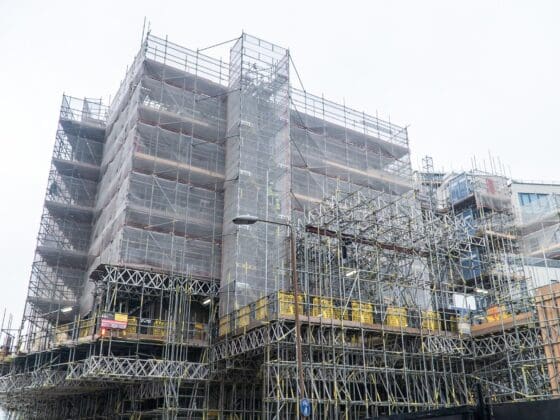
Bellville House, Greenwich
A shared-ownership residential building in Greenwich required complete cladding replacement after a rendered system incorporating expanded polystyrene insulation was found to fail current fire safety regulations. The building never closed. The nursery never stopped. The DLR ran unaffected throughout.
WINGATE HOUSE, SOHO
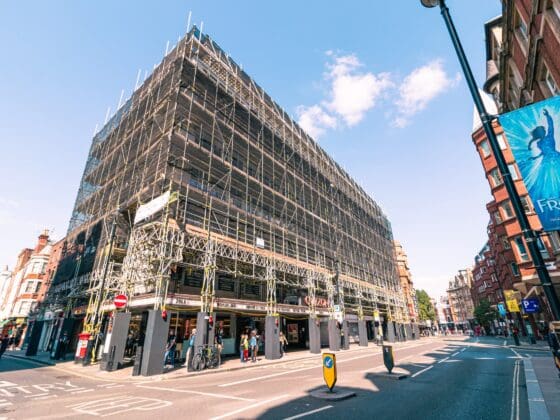
WINGATE HOUSE, SOHO
A 1958 modernist landmark on Shaftesbury Avenue, described at the time of its construction as an exemplar office building, and left largely untouched for six decades. Bringing it back to that standard meant a back-to-frame refurbishment on one of Soho's busiest streets, with the Curzon Cinema trading below throughout.