
The Heritage at Risk Register will continue to grow, and climate change will continue to threaten historic building stock.
The engineering problem
Most buildings on the Heritage at Risk Register are unsafe to access due to deterioration. Water ingress has damaged masonry, timber frames have decayed, and stone facades are unstable. These structures have been abandoned for years or even decades.
Before any preservation work begins, the building needs scaffolding. But you’re scaffolding a structure that might not tolerate the loading. The engineering here determines whether preservation is even viable.
Claridge’s Hotel refurbishment
The Claridge’s refurbishment included excavating a five-storey, 32-metre-deep basement beneath a live hotel. Grade II* listed. Victorian and Art Deco facades. 80-year-old concrete foundations. The building stayed operational throughout.
Guests checked in while we scaffolded around them. The restaurant remained open while we provided access for lift-shaft installations three floors above.
Standard approaches don’t work when you’re supporting heritage facades above active basement excavation. Load paths change as structural work progresses. Tie positions need constant reassessment. The scaffold becomes part of the temporary works design.
We maintained the workforce on site because engineering requirements changed as the work revealed conditions. When you’re scaffolding around live structural intervention in heritage buildings, adaptability isn’t optional.
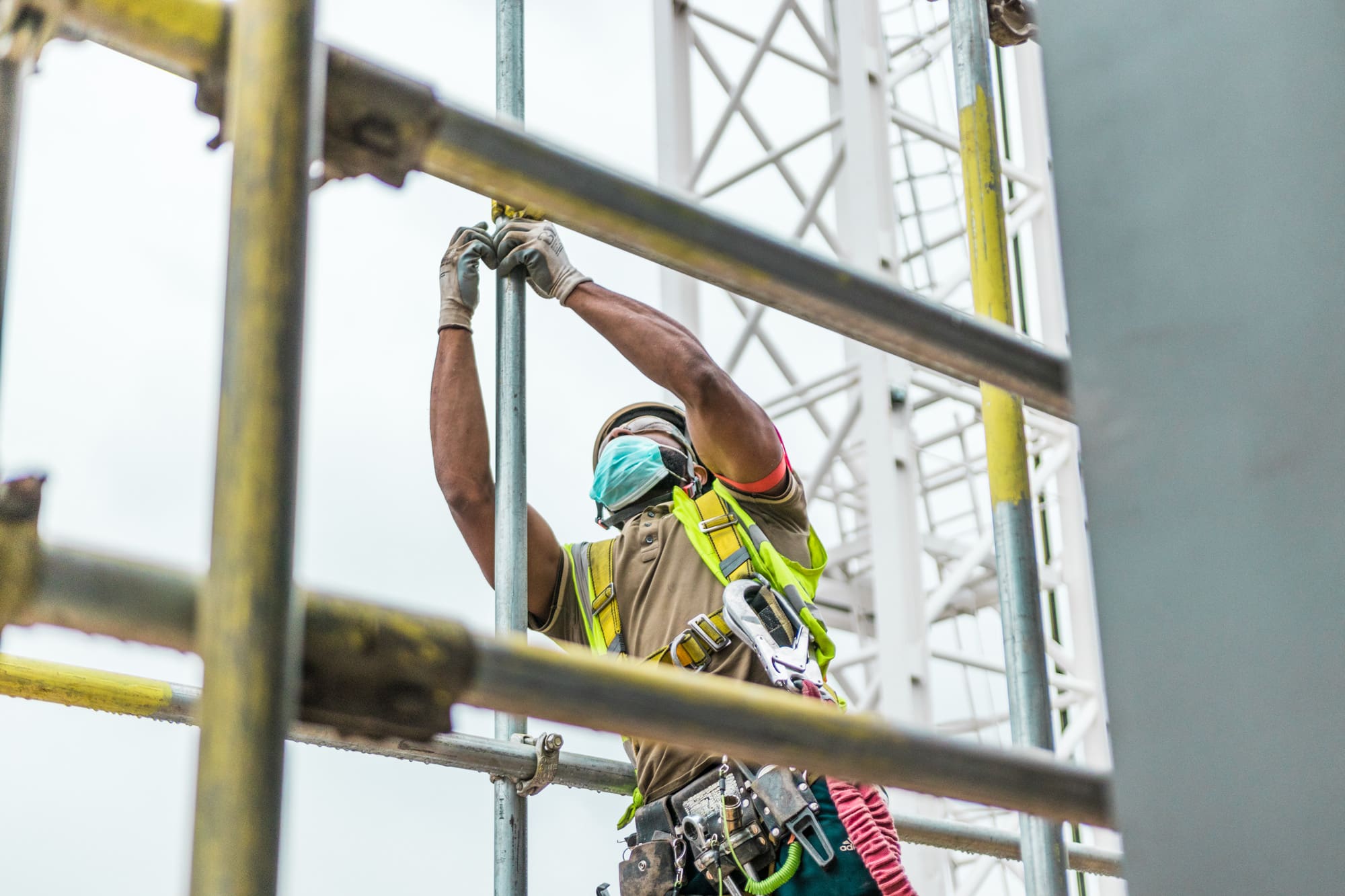
Climate adaptation needs the same thinking
Historic England’s climate resilience guidance requires extensive access to building envelopes that were never designed for modern intervention. Retrofitting climate resilience into a structure on the Heritage at Risk Register means working on something that’s vulnerable by definition.
The scaffolding becomes part of the climate adaptation. Temporary works protecting the building from the weather during the intervention. Supporting elements until they’re stabilised. Enabling work that would otherwise cause the damage you’re trying to prevent.
This is scaffolding engineering applied, where the margin for error is smaller. The conversation starts with what the structural engineer found, not what the drawings show.
The Heritage at Risk Register will continue to grow, and climate change will continue to threaten historic building stock.
50 years of engineering in live Heritage environments
We have extensive experience in heritage projects, having worked on HMS Belfast, English Heritage sites, National Trust properties, and live hotels above active excavations. Buildings where structural surveys dictated caution. Where conservation engineers and structural teams needed to agree on every load path before we could proceed.
This is where scaffolding moves from access provision to engineering partnership. Where understanding historic construction methods, material degradation, and acceptable intervention points becomes as important as the scaffold design itself.
The buildings on the Heritage at Risk Register need this level of thinking. The £1.5bn in preservation funding will flow to projects where getting the temporary works right determines whether the permanent works can even begin.
That’s the work we do. Scaffolding where the engineering enables everything else.
Claridge’s Hotel: Access engineering for vertical complexity
When Maybourne Hotel Group decided to add three floors to Claridge’s iconic roofline and excavate five basement levels beneath the Art Deco wing—all while keeping the Grade I listed hotel fully operational—the scaffolding brief went far beyond perimeter wraps.